
DIY build step 5
Running Utilities to a DIY Outdoor Kitchen
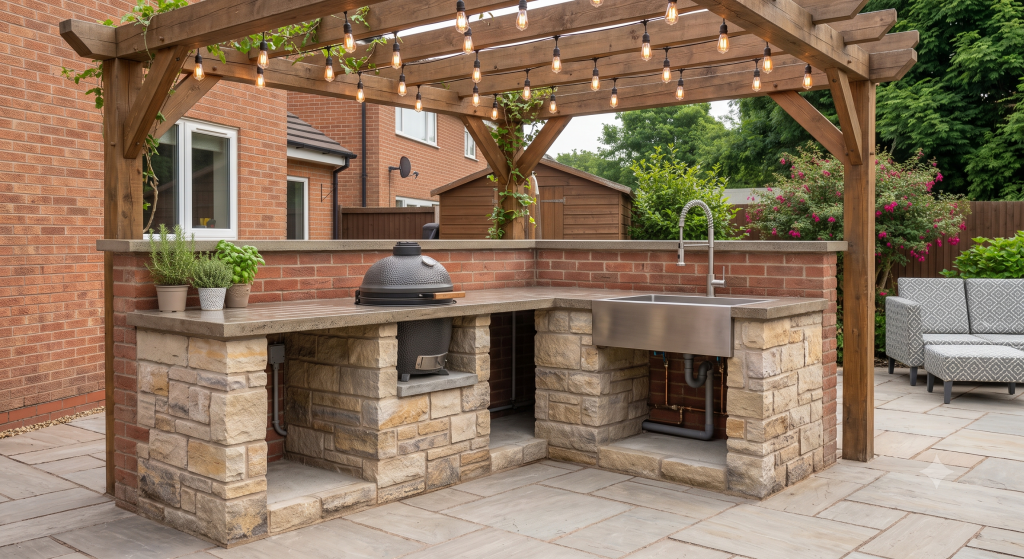
Plan power, lighting, water, waste and gas before the frame is closed. Utilities can make an outdoor kitchen more useful, but they are also where safety, regulation and budget matter most.
Plan power, lighting, water, waste and gas before the frame is closed. Utilities can make an outdoor kitchen more useful, but they are also where safety, regulation and budget matter most.
Power
Power
Outdoor circuits need correct protection, cable route planning and qualified electrical work.
Water
Water
A sink is convenient only if the feed can be isolated and the waste has a proper route.
Gas
Gas
Bottled gas is flexible; fixed gas pipework needs a qualified Gas Safe engineer.
Electrical
Treat outdoor power as a planned circuit, not an extension lead
Outdoor sockets, fridge supplies and lighting should be designed around weather exposure, cable protection, RCD protection and safe switching. Do not bury ordinary flex or hide junctions behind fixed cladding.
Agree the cable route before foundations or paving are finished.
Use outdoor-rated fittings in sensible positions.
Keep sockets away from sinks, splash zones and direct grill heat.
Budget for testing and certification.
Lighting
Run lighting cables before the final cladding
Task lighting over the grill and prep area is much easier to wire before the kitchen is finished. If you are adding a pergola, decide whether lights switch from the house, the kitchen, or both.
Separate task lighting from mood lighting where possible.
Avoid glare at eye level near seating.
Use IP-rated fittings suitable for the exposure.
Leave access to drivers and transformers.
Plumbing
Water is easy to want and harder to drain
Cold water can be useful for handwashing and rinsing, but the waste route is often the deciding factor. Plan isolation for winter, backflow protection where required, and a legal waste connection rather than letting greasy water run across the patio.
Put an isolation valve where you can reach it.
Plan drain fall before installing the sink.
Protect pipework from frost.
Avoid long, flat waste runs that block easily.
Fuel
Choose bottled or fixed gas early
Bottled gas keeps the build simpler and easier to change. Fixed gas may suit a permanent premium kitchen, but it changes the planning, cost and professional involvement. In both cases, ventilation and access are not optional.
Leave bottle storage ventilated and accessible.
Do not seal gas bottles inside airtight cabinets.
Use the appliance manual for clearances and ventilation.
Use a Gas Safe engineer for fixed gas work.