
Start here
The Complete Guide to Outdoor Kitchens
Plan a UK outdoor kitchen that works in real weather: layout, materials, BBQ choice, lighting, safety, services and planning checks.
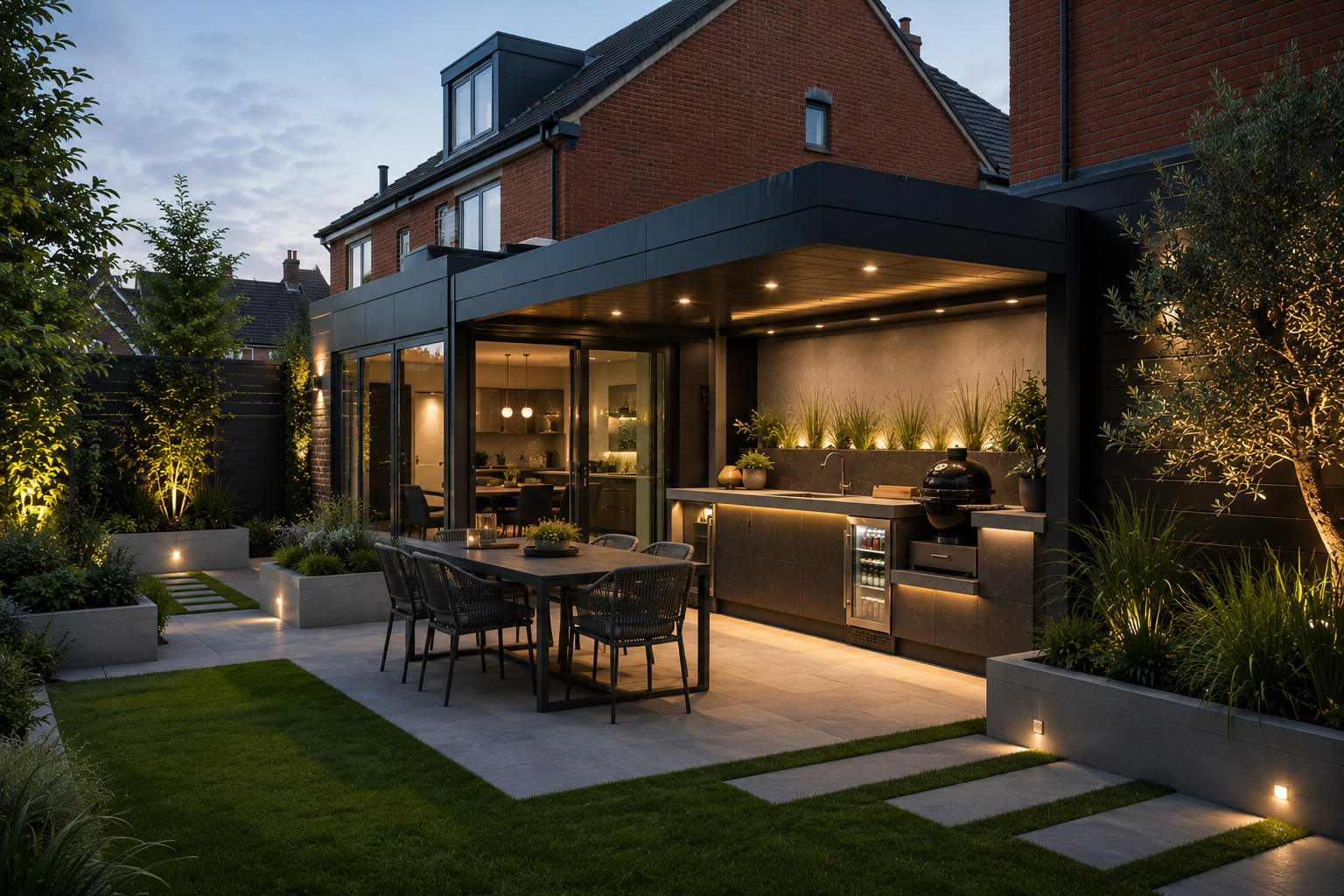
An outdoor kitchen is more than a BBQ parked on the patio. It is a planned cooking and prep zone with outdoor-rated materials, useful worktop space, storage, lighting and sometimes water, power, refrigeration or shelter. This page is the starting point for choosing what to build and what to check before you spend.
On this page
Quick definition
What actually counts as an outdoor kitchen?
A dedicated outside cooking and food-prep area that stays in place year-round and functions like a small kitchen, not just a portable grill. It usually combines cooking equipment, prep space, storage, outdoor-rated materials and a clear relationship to seating or dining.
Portable and temporary
A freestanding grill plus a side table. Useful, but usually packed away or moved around.
Planned and repeatable
A fixed or semi-permanent cooking zone with worktop, storage and a more natural workflow.
Integrated and social
A kitchen, dining and seating space designed as an extension of the house and garden.
Planning path
Build the plan in this order
The biggest mistakes usually come from choosing appliances before layout, materials or services. Start with how the space will work.
Choose the location
Near the house for services and carrying food, or deeper in the garden if entertaining is the priority.
Map the workflow
Storage to prep to cooking to serving and clean-up, with the cook still part of the conversation.
Pick the build route
Modular for speed and flexibility, masonry or bespoke for a permanent landscaped feel.
Check services and rules
Gas, power, water and drainage, plus planning permission and building regulations, can all shape the design.
Core components
What to include in an outdoor kitchen
Cooking
Built-in gas or charcoal grill, hybrid grill, side burner, pizza oven, smoker or a smaller modular BBQ.
Prep
Weatherproof worktop space for chopping, resting food, plating and serving. Small kitchens still need prep space.
Storage
Outdoor-rated cabinets, drawers and shelves for tools, fuel, covers, crockery and cleaning kit.
Water
A sink and tap if the outdoor kitchen plumbing makes sense, or a nearby wash-up point for simpler setups.
Power
Outdoor-rated sockets for lighting, fridges, ignition, rotisseries and small appliances.
Shelter and lighting
Pergola, canopy or awning plus task, ambient and accent lighting for evening use.
Layout choices
Straight run, L-shape or island?
Straight run
A linear kitchen against a wall or fence. Efficient, affordable and ideal for narrow gardens and compact patios.
L-shape
Grill on one side, prep or sink on the other. Helps define a social zone without enclosing the garden.
Island
A central block with seating or circulation around it. Works best where there is generous patio space.
UK climate
Design for rain, frost and damp air
Weather resistance is not optional in the UK. Choose outdoor-rated appliances, stainless or powder-coated metal, robust hinges, frost-safe worktops and paving that drains properly.
Material shortcut
Best materials for UK outdoor kitchens
| Part | Good choices | Why |
|---|---|---|
| Cabinets | Stainless steel, powder-coated aluminium, composite, masonry | Built to resist moisture, heat and regular cleaning. |
| Worktops | Porcelain, sintered stone, sealed granite | Low maintenance, heat tolerant and more weather resistant. |
| Flooring | Outdoor porcelain, suitable natural stone, textured concrete | Better slip resistance, drainage and durability. |
| Avoid | MDF, chipboard, indoor laminate, untreated softwood carcasses | They swell, rot or delaminate when repeatedly exposed outdoors. |
Safety and services
Ventilation, fuel, water and power
Ventilation
Roofed or semi-enclosed kitchens need clear smoke paths and manufacturer clearances.
Gas
Fixed gas work should be handled by a suitably qualified professional, normally Gas Safe registered.
Electrics
Outdoor sockets, buried cables and fixed lighting need proper weather protection and qualified installation.
Water
Plan supply, waste, frost protection, shut-off valves and winter drain-down before digging trenches.
Build route
Modular vs built-in outdoor kitchens
Modular systems
Pre-built or modular outdoor kitchen systems combine quickly. Good for smaller gardens, existing patios and future changes.
- Faster installation
- Easier to reconfigure
- Often less disruptive
Built-in or masonry kitchens
Custom blockwork, brick or concrete bases with cladding and built-in appliances. Best when landscaping the whole patio and setting a clear outdoor kitchen budget.
- More permanent
- More architectural
- Harder to move later
Rules and permissions
Do you need planning permission?
Many open, low-level outdoor kitchens are straightforward, but roofed structures, boundary-side canopies, listed properties and conservation areas need more care.
Example setup
A realistic starter outdoor kitchen
For a modest terrace garden or small suburban patio, this is a sensible first build.
FAQs
Outdoor kitchen basics
What is the difference between an outdoor kitchen and a BBQ?
A BBQ is usually just the cooking appliance. An outdoor kitchen is a planned cooking zone with prep space, storage and outdoor-rated materials, often with lighting, power, water or shelter.
What is the best layout for a first outdoor kitchen?
For most UK gardens, a straight run against a wall or fence is the simplest place to start. It keeps services short and preserves garden space.
What should I choose first?
Choose the location and workflow before choosing appliances. The best grill is less useful if there is nowhere to prep, serve or move safely.