
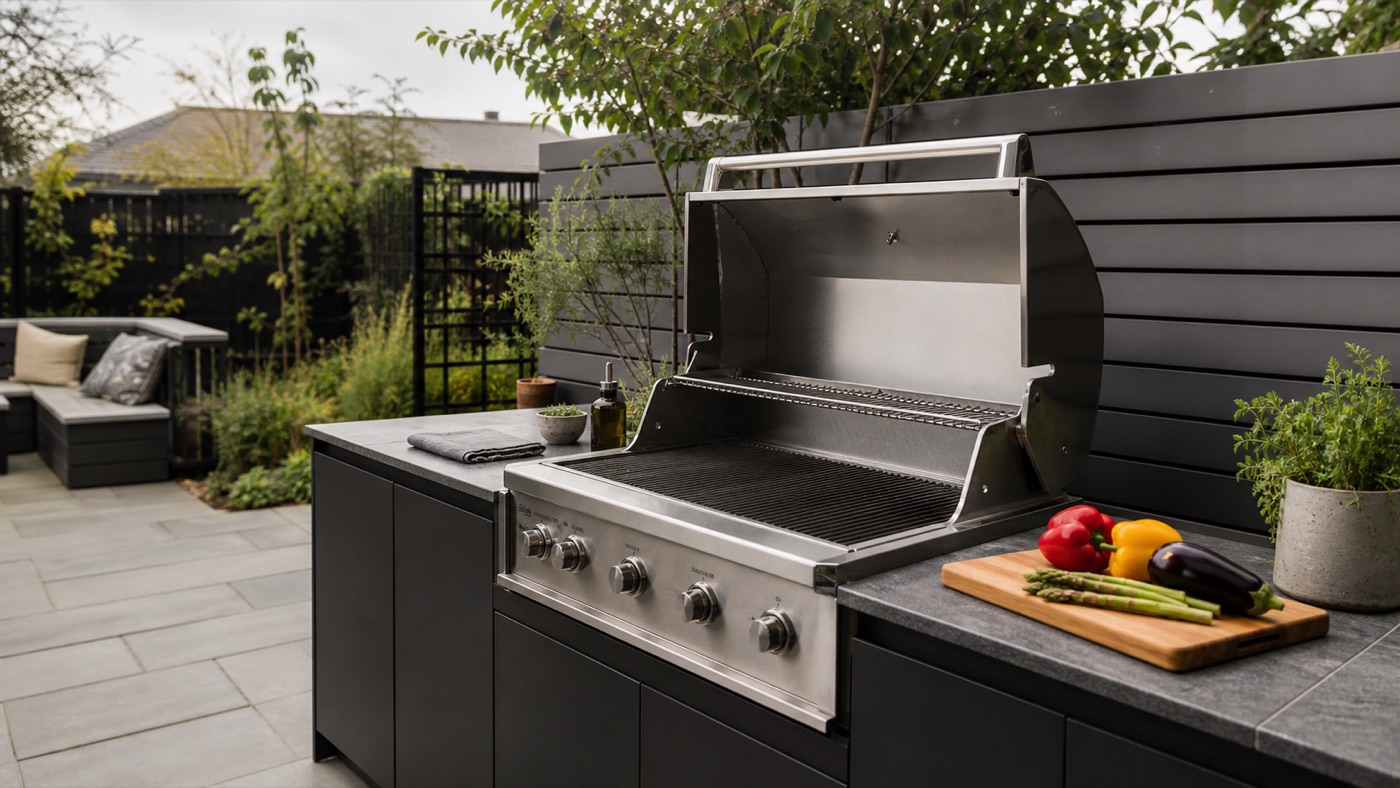
Outdoor kitchen BBQ guide
BBQ Types for Outdoor Kitchens
Compare gas, charcoal, hybrid, electric, pellet and kamado BBQs by flavour, convenience, space, maintenance and how they fit into a real garden kitchen.
The right BBQ changes the whole outdoor kitchen. It affects your layout, heat clearances, worktop space, storage, ventilation, fuel storage, cleaning routine and the type of food you will actually cook outside. For most UK garden kitchens, a built-in gas grill is the easiest everyday choice, while charcoal, kamado and pellet cookers are better when flavour and slower cooking matter more than speed.
On this page
Quick answer
Which BBQ type should you choose?
Start with how often you cook outdoors. The best BBQ is the one that fits your weeknight habits as well as your weekend ambitions.
Best everyday choice
Gas BBQ
Fast to light, easy to control and simple to build into a permanent outdoor kitchen. Best when convenience matters most.
Best flavour ritual
Charcoal or kamado
More hands-on, more cleanup and more character. Best for cooks who enjoy fire management and smoky flavour.
Best low-and-slow
Pellet BBQ
Great for smoking, roasting and controlled longer cooks, especially when you want wood flavour without constant tending.
Best compact option
Electric BBQ
Useful for smaller terraces and simpler setups where live fuel storage, smoke and ash are less practical.
Decision guide
Choose by the way you cook
Use these cards as a practical shortcut before getting lost in burner counts, accessories and brand ranges.
Weeknight grilling
Choose gas if you want burgers, chicken, vegetables and quick family meals with minimal setup.
Steaks, smoke and fire
Choose charcoal or kamado if the cooking experience is part of the fun and you do not mind ash cleanup.
Brisket, ribs and roasts
Choose pellet if steady heat, smoke and longer cooks matter more than high-speed grilling.
Small patios and terraces
Choose electric when space is tight and you want simple outdoor cooking with fewer fuel-storage headaches.
Comparison
Outdoor kitchen BBQ type comparison
Compare the main tradeoffs before you commit to cut-outs, gas lines, storage and cabinet modules.
| BBQ type | Best for | Convenience | Flavour | Planning notes |
|---|---|---|---|---|
| Gas | Frequent grilling and entertaining | High | Clean, controlled grill flavour | Plan ventilation, gas shutoff access and heat-resistant surrounds. |
| Charcoal | Traditional BBQ flavour and high direct heat | Medium-low | Strong smoky character | Allow safe ash handling, airflow and non-combustible surfaces. |
| Hybrid | One grill for gas convenience and charcoal flavour | Medium-high | Flexible | Check whether both fuel modes can be used practically in the same layout. |
| Electric | Small gardens, terraces and simple cooking | High | Milder | Needs suitable outdoor electrics and weather-protected positioning. |
| Pellet | Smoking, roasting and low-and-slow cooking | Medium-high | Wood-smoked | Needs power, pellet storage and space for heat and exhaust. |
| Kamado | Premium charcoal grilling, smoking, baking and roasting | Medium | Deep charcoal flavour | Heavy unit; plan support, lid clearance and non-combustible zones. |
BBQ types
The main options for outdoor kitchens
Each fuel type changes how the kitchen feels day to day. The smartest setup is often one primary BBQ plus a specialist cooker if space and budget allow.
Gas BBQs
Gas BBQs are the most straightforward fit for a permanent outdoor kitchen. They light quickly, give predictable temperature control and work well with side burners, warming racks and built-in storage.
- Choose gas if: you want regular, low-effort cooking and easy entertaining.
- Watch out for: ventilation, heat clearances, gas bottle access or a correctly installed mains gas connection.
Charcoal BBQs and kamados
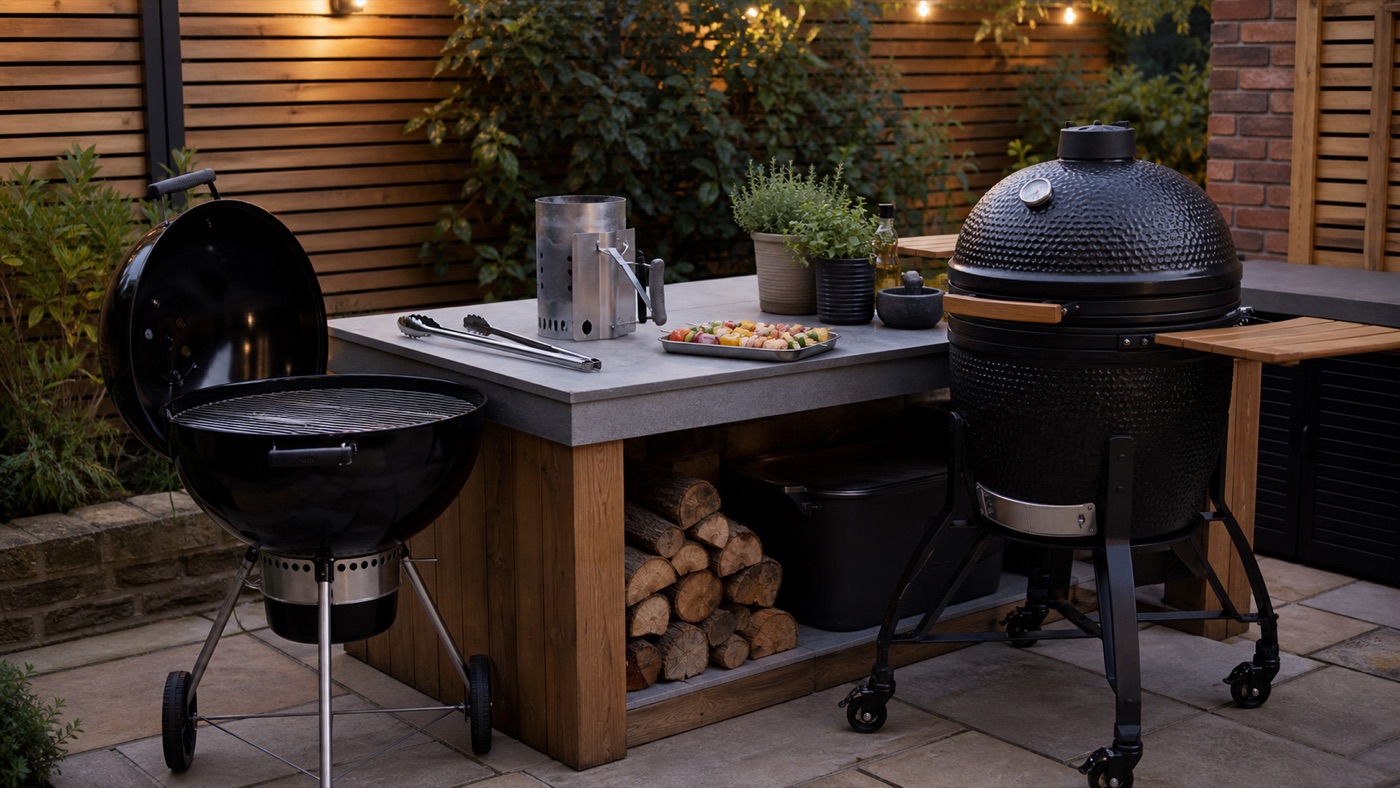
Charcoal gives the classic BBQ experience: hotter direct heat, smoke, ritual and flavour. Kamado cookers add excellent heat retention and versatility for smoking, roasting and baking.
- Choose charcoal if: flavour and fire management are part of why you cook outside.
- Watch out for: ash, longer setup, airflow, lid clearance and safe storage for charcoal.
Hybrid BBQs
Hybrid BBQs suit people who want gas speed during the week and charcoal flavour at weekends. They can be a useful compromise, but only if both fuel modes are easy to use in the space you have.
- Choose hybrid if: you genuinely use both cooking styles and want one main grill.
- Watch out for: larger footprints, extra cleaning and whether the charcoal side performs as well as a dedicated unit.
Electric BBQs
Electric BBQs are practical for compact gardens, terraces and lower-maintenance cooking. They are not usually the centrepiece of a large built-in kitchen, but they can be the right answer when storage, fuel and smoke are limiting factors.
- Choose electric if: you want plug-in simplicity and a small-space-friendly setup.
- Watch out for: outdoor socket safety, weather protection and lower smoky flavour.
Pellet BBQs
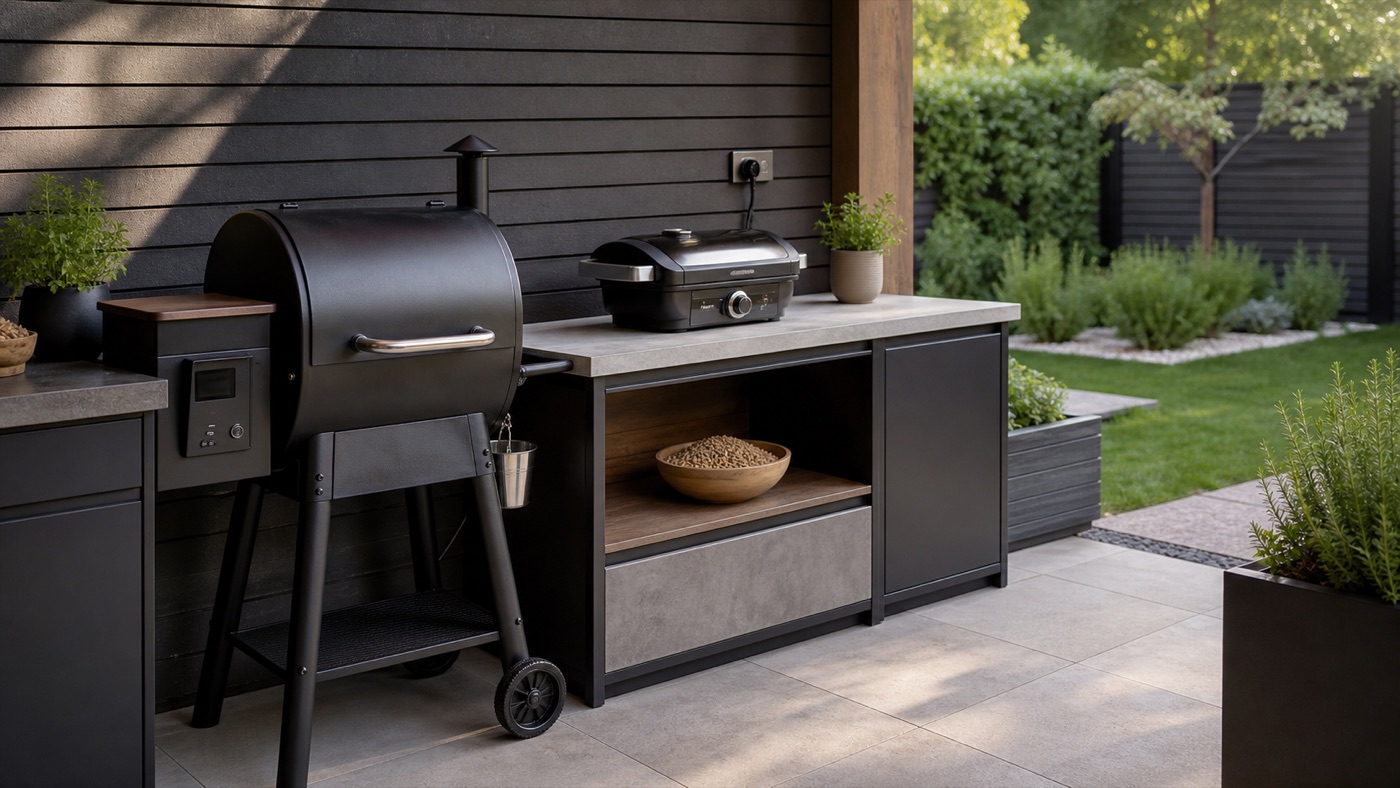
Pellet grills feed wood pellets automatically to hold steady temperatures. They are particularly good for ribs, pork shoulder, brisket, whole chickens and relaxed longer cooks.
- Choose pellet if: you want wood-smoked flavour and controlled low-and-slow cooking.
- Watch out for: power supply, dry pellet storage, startup time and exhaust clearance.
Layout and safety
Plan the BBQ before you order cabinets
The BBQ should be decided before worktop cut-outs, cabinet modules, wall cladding and services. Changing fuel type later is usually expensive.
Leave prep space on both sides
Aim for a landing zone for raw food on one side and cooked food on the other, even in a compact layout.
Keep heat away from combustibles
Timber fences, pergola posts, cladding and shelves need proper clearances and fire-resistant detailing near the grill.
Plan services and storage
Gas, electricity, charcoal, pellets, covers and cleaning tools all need somewhere safe and convenient to live.