
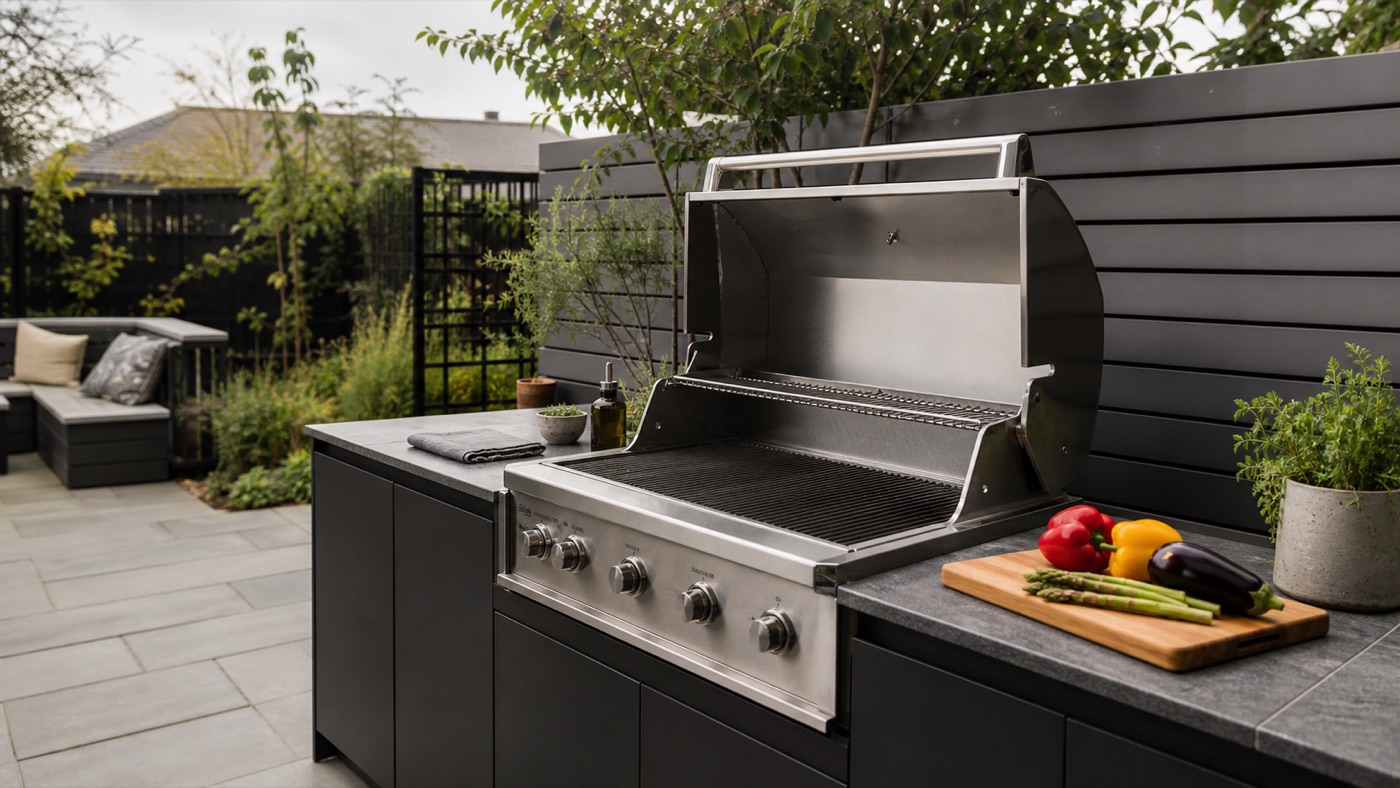
Outdoor kitchen BBQ guide
Gas BBQs for Outdoor Kitchens
Gas is the easiest main grill for regular outdoor cooking, but the right setup depends on burner quality, ventilation, gas access, cabinet fit and reliable parts support.
A gas BBQ works best when your outdoor kitchen needs to be easy to use often. It lights quickly, gives predictable heat and keeps cleanup simple, but it needs proper ventilation, gas shutoff access and enough worktop space around the grill.
Best for
Frequent grillingWeeknight food, family cooking, entertaining and reliable two-zone heat.
Watch out for
Gas accessBottle storage, shutoff access, vents and manufacturer cut-out dimensions matter before cabinets are built.
Flavour note
Clean grill tasteGas is convenient, but pair it with charcoal or pellet cooking if deep smoke is the priority.


On this page: Verdict Brand shortlist Buying checks Layout notes FAQs
Quick verdict
Choose gas if convenience matters more than fire theatre
A gas BBQ is the sensible centrepiece for most outdoor kitchens because it removes friction. You can preheat it quickly, cook predictable meals and entertain without managing charcoal or pellets. The compromise is flavour: gas gives clean grill flavour, not deep smoke.
Brand shortlist
Gas BBQ brands worth comparing
Start with the brand names below, then compare the actual model, burner material, warranty, spare parts and built-in dimensions. A strong logo does not automatically mean the right grill for your island.

Weber
Mainstream premium

Napoleon
Premium challenger

Char-Broil
Value and mid-range

Outback
UK garden favourite

Campingaz
UK and Europe staple

CosmoGrill
Online value buy

Outsunny
Budget online option

Nexgrill
US value segment

Broil King
North American enthusiast
| Brand route | Best fit | Check before buying |
|---|---|---|
| Weber, Napoleon, Broil King | Higher-use outdoor kitchens where parts, warranty and build quality matter. | Built-in compatibility, gas type, sear zone options and replacement parts. |
| Char-Broil, Outback, Campingaz | Practical family grilling and freestanding garden kitchens. | Burner material, body finish, weather protection and spares. |
| CosmoGrill, Outsunny, Nexgrill | Budget-led buyers who want more burners for less money. | Assembly quality, warranty depth, rust resistance and long-term parts availability. |
Buying checks
What to check before buying
Burner materialLook for stainless or cast stainless burners, solid flame tamers and easy replacement parts.
Cooking areaFour burners are often more flexible than two because you can create proper direct and indirect zones.
Gas setupPlan bottle access, shutoff access, regulator space, ventilation and whether you want bottled gas or a professional mains connection.
Cabinet fitCheck exact manufacturer cut-out dimensions before worktops or frames are fabricated.
Layout notes
Plan the gas grill before the cabinets
Gas appliances should never be treated as just another cabinet module. The island needs ventilation, access and heat-safe detailing that matches the grill manufacturer’s instructions.
Ventilation
Do not seal the gas zone
Gas bottle storage and built-in grills need air movement. Avoid airtight enclosed cabinets.
Access
Keep shutoffs reachable
You should be able to reach the gas shutoff, bottle and regulator without unpacking the whole cabinet.
Workflow
Leave landing space
Keep prep space on one side and a clean landing zone for cooked food on the other.
FAQs
Gas BBQ FAQs
Are gas BBQs good for outdoor kitchens?
Yes. Gas is usually the easiest main grill for a permanent outdoor kitchen because it is quick, controllable and straightforward to integrate when ventilation, shutoff access and clearances are planned correctly.
Which gas BBQ brands are most popular?
Weber, Napoleon and Char-Broil are the strongest cross-market names. In the UK, Outback and Campingaz are also important garden BBQ brands.
What should I check before building in a gas BBQ?
Check exact cut-out dimensions, ventilation requirements, gas type, shutoff access, heat clearances and replacement parts availability.
Do gas BBQs need ventilation when built in?
Yes. Built-in gas grills and gas bottle storage need suitable ventilation and accessible shutoffs. Follow the manufacturer instructions and use qualified trades where gas work is required.